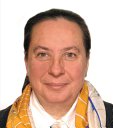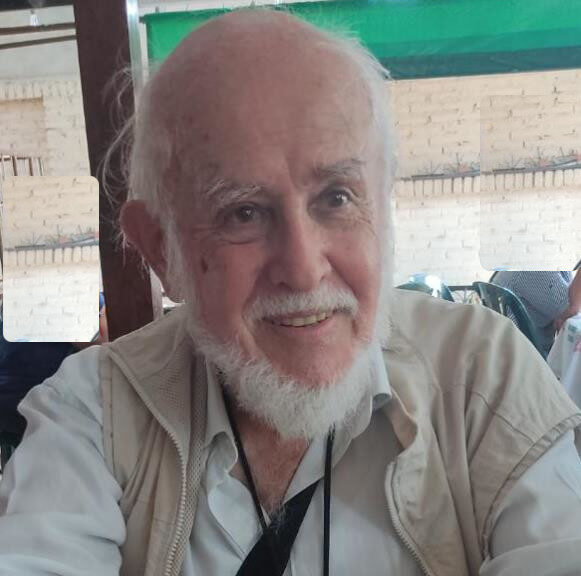
Dr. Jorge Asín Capriles

(Español)

A Tribute to an Intellectual Life Dedicated to Knowledge, Science and Human Connection

There are individuals whose influence extends far beyond the formal boundaries of their profession. Their contribution cannot be measured solely by academic degrees, publications, institutional positions, or years of service. Their true legacy is found in the people they educate, the minds they inspire, the ideas they encourage, and the bridges they build between people and institutions.

Dr. Jorge Asín Capriles is such a person.

Distinguished professor of the Universidad Autónoma Gabriel René Moreno (UAGRM), intellectual, mentor, philosopher, promoter of scientific activity, and tireless seeker of knowledge, Dr. Asín Capriles has devoted an important part of his life to intellectual development and to the creation of opportunities for dialogue and collaboration.

His relationship with the High Altitude Pulmonary and Pathology Institute (HAPPI-IPPA) has been a particularly meaningful expression of this vocation.

An exceptional professor and mentor

For generations of students at the Universidad Autónoma Gabriel René Moreno, Dr. Asín Capriles has represented the highest values of university teaching. His students have had the privilege of being guided during their dissertations by a professor whose intellectual interests extend well beyond the conventional limits of an academic discipline. He has encouraged students not merely to obtain a degree, but to develop the intellectual independence necessary to question, investigate, and construct knowledge. This distinction is important. A professor transmits knowledge. A great professor teaches students how to seek knowledge for themselves.

Dr. Asín Capriles belongs to the latter category.

His academic career has been accompanied by a persistent interest in broader questions concerning science, philosophy, nature, humanity, and knowledge. This breadth of thought has made him not only an educator, but also an intellectual reference for those who have had the opportunity to engage with him.

He has been recently honored at the UAGRM:
https://www.facebook.com/watch/?v=4621886534761100
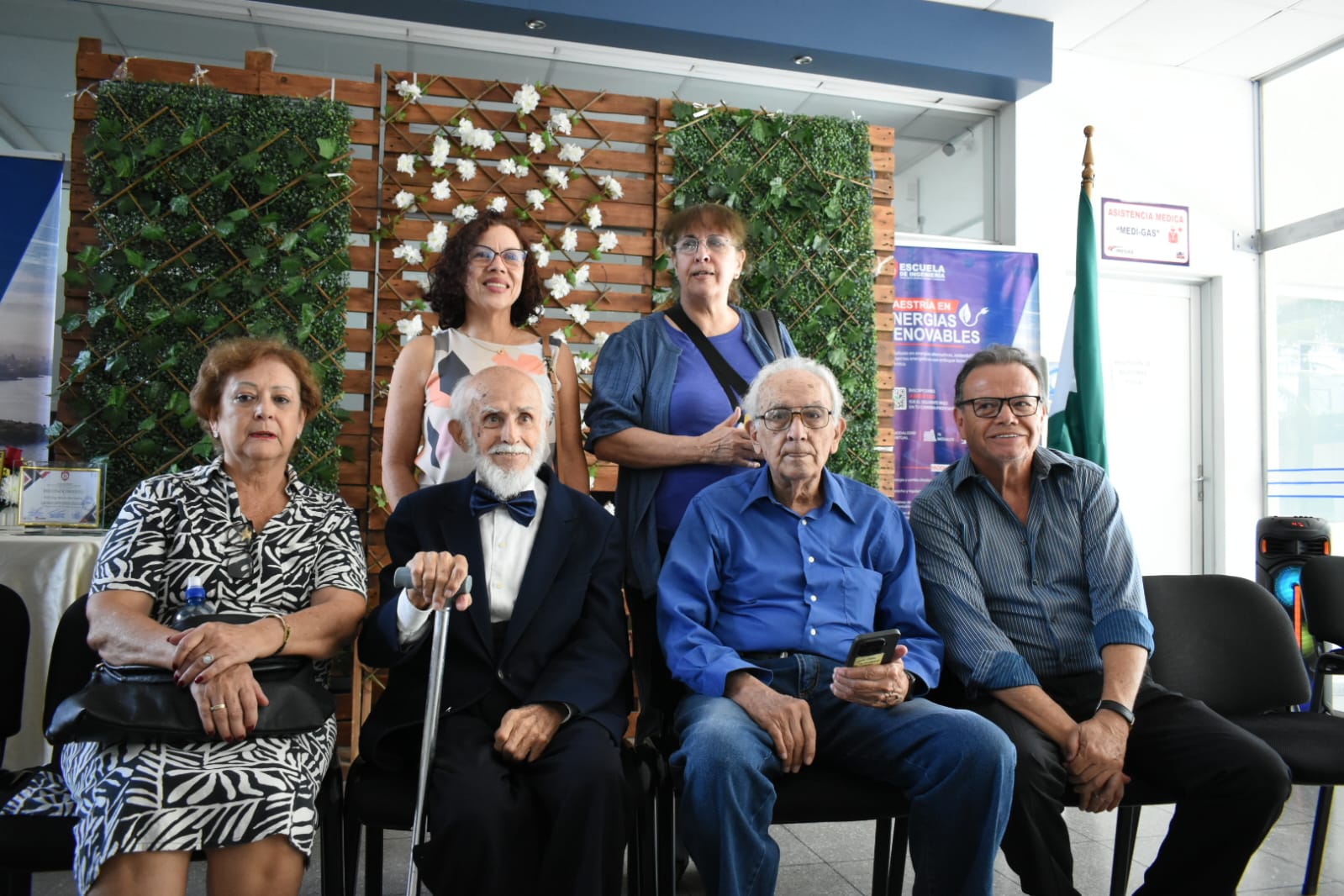
A valued collaborator of HAPPI-IPPA

At HAPPI-IPPA, we have experienced another dimension of Dr. Asín Capriles’ contribution: his extraordinary generosity as a collaborator.
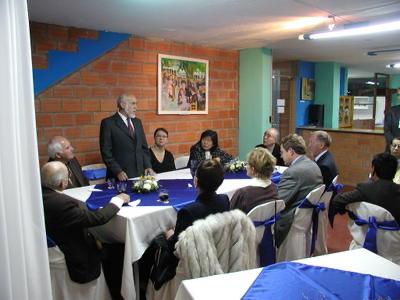
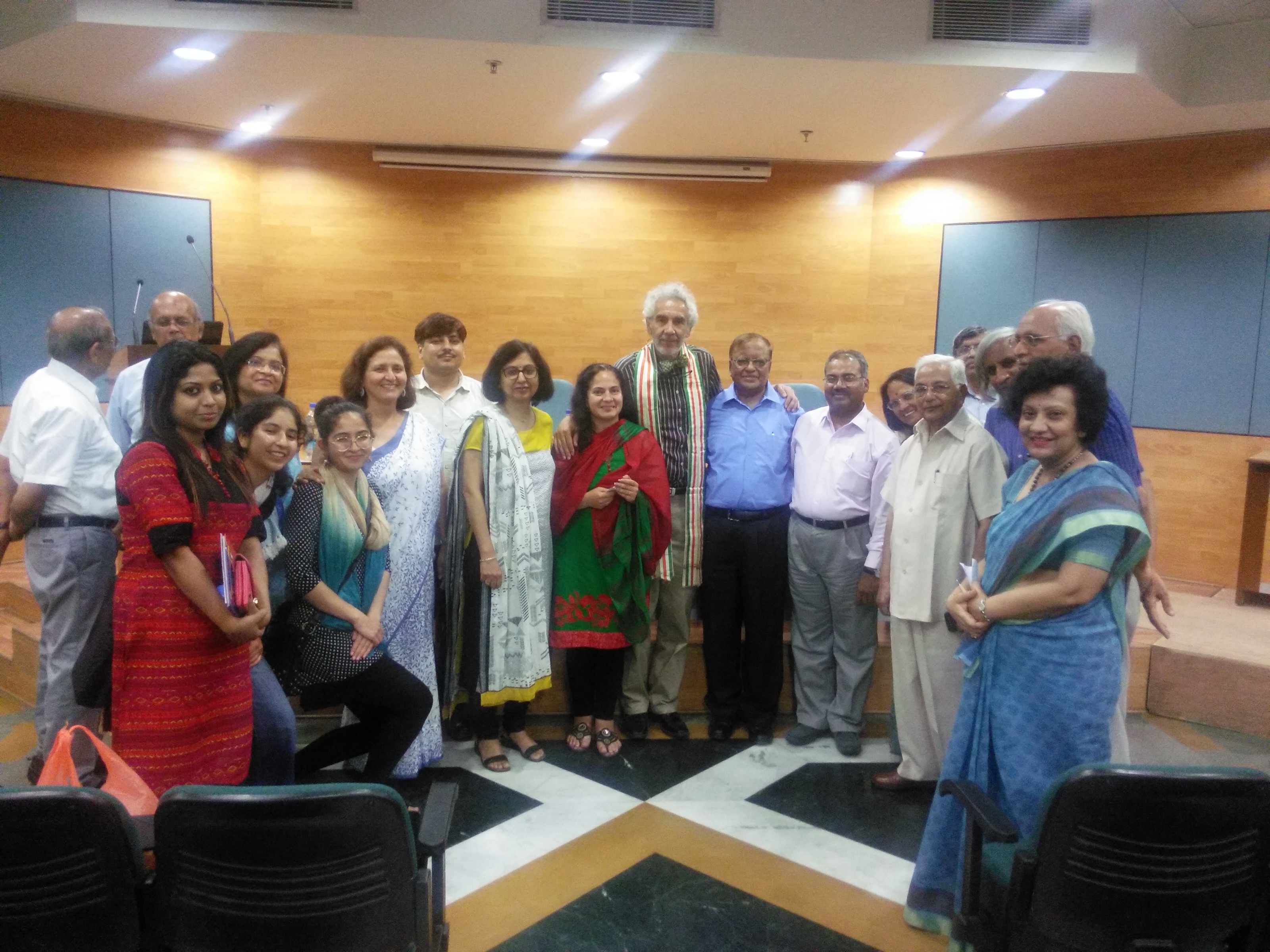
In the 3rd Symposium of Chronic Hypoxia at HAPPI_IPPA

He has consistently promoted our scientific activities and encouraged intellectual exchanges with researchers, professionals, academics, and other interesting individuals whom he has personally identified and brought into our sphere of interaction. This is one of his most remarkable qualities.

Jorge Asín knows how to connect people.

He recognizes intellectual potential in others and understands that knowledge becomes more powerful when it is shared. His collaborations have therefore often extended beyond a particular activity or event. A simple introduction can become a scientific conversation; a conversation can become a collaboration; a collaboration can lead to a publication, a symposium, or a new intellectual initiative. Through these actions, he has continuously strengthened the networks surrounding HAPPI-IPPA. His contribution has never been limited to what he personally produces. He has also been committed to helping others produce, communicate, and develop their own ideas.

That generosity is a form of intellectual leadership.

The Science, Honor and Truth Medal
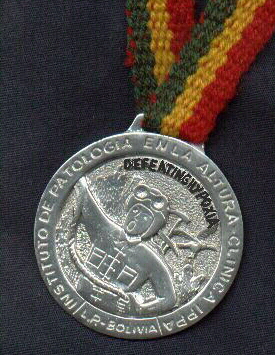
In recognition of his exceptional contribution, HAPPI-IPPA had the great honor of awarding Dr. Jorge Asín Capriles the Science, Honor and Truth Medal during the 9th Chronic Hypoxia Symposium. This distinction carries a special significance.

https://www.altitudeclinic.com/award.html

Dr. Asín Capriles is the only Bolivian recipient of the Science, Honor and Truth Medal.

The uniqueness of this recognition reflects the uniqueness of his contribution. The words Science, Honor and Truth are not simply ceremonial concepts. They represent principles that have guided his intellectual life: the pursuit of knowledge, integrity in intellectual activity, and respect for truth as the foundation of meaningful inquiry.

For HAPPI-IPPA, awarding this medal to Dr. Asín Capriles was therefore an expression of profound appreciation for a collaborator whose contribution has extended far beyond any single scientific activity. It was also a recognition of a person who has consistently demonstrated that intellectual generosity is itself a form of service.
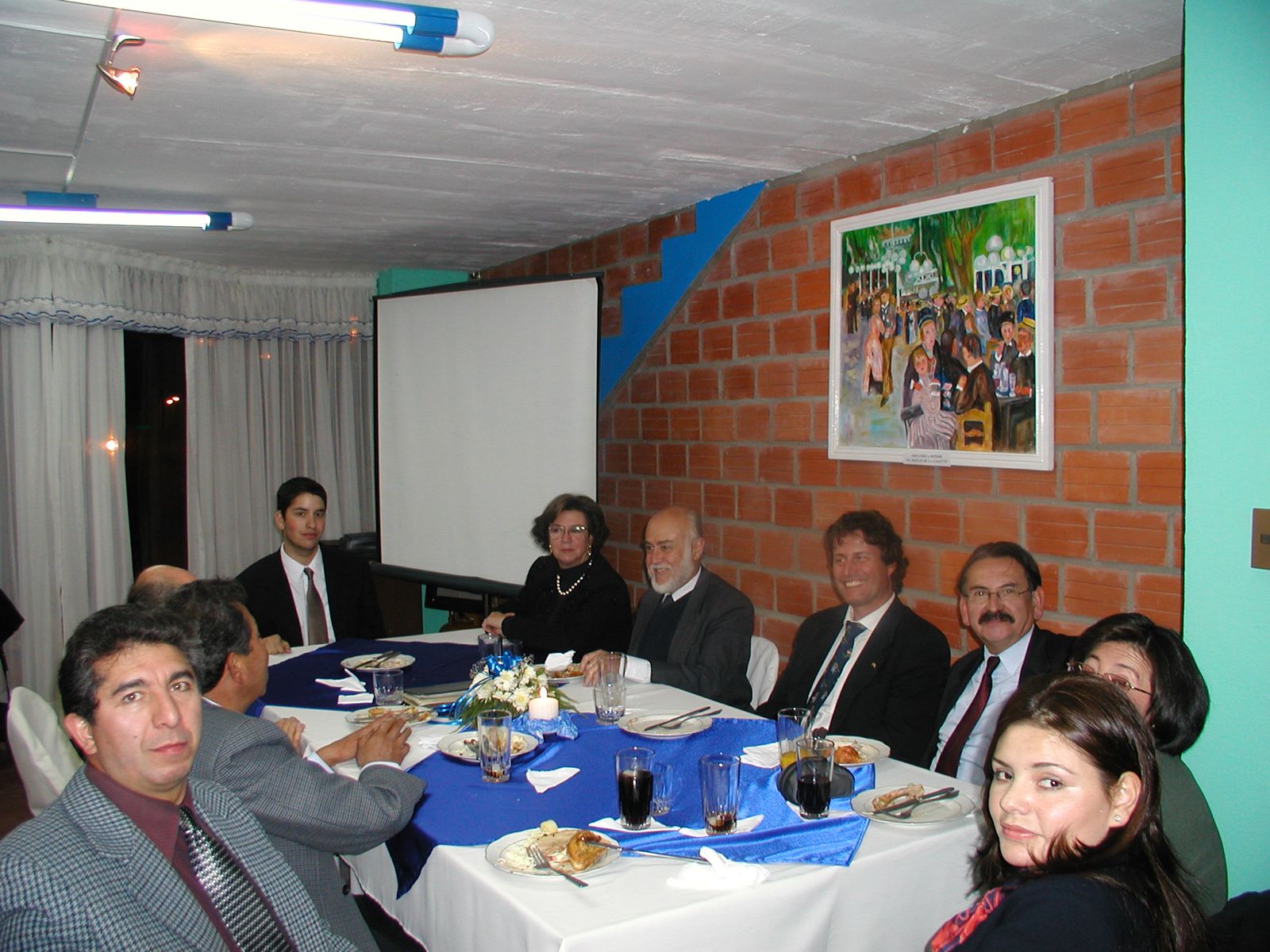
A lifelong student of knowledge

Perhaps one of the most admirable aspects of Dr. Asín Capriles’ character is that his intellectual journey has never reached a point at which he considered himself finished. On the contrary, his curiosity has continued to expand. His particular interest in philosophy, and especially in the thought of Immanuel Kant, illustrates the depth of his intellectual pursuits. His engagement with Kant has led him to explore fundamental questions about knowledge, reason, human understanding, and the nature of intellectual inquiry.

It reflects Dr. Asín’s appreciation for individuals who are willing to challenge established assumptions, pursue knowledge independently, and dedicate their lives to questions that extend beyond immediate practical considerations.

His philosophical interests therefore complement his scientific vocation. Both arise from the same fundamental impulse: the desire to understand. And this desire has remained alive throughout his life.

The courage to continue learning

One of the most inspiring demonstrations of Dr. Asín Capriles’ intellectual vitality is his recent achievement of obtaining a Master’s degree in Psychology. This achievement deserves particular recognition. It demonstrates that intellectual curiosity does not belong to youth alone. It does not disappear with age. And it does not end when one receives a degree. For Dr. Asín, education is not merely a stage of life.

Education is a lifelong way of living.

His new Master’s degree is therefore more than an academic achievement. It is a statement about the nature of intellectual life itself: that the desire to learn can remain vigorous throughout one’s entire existence. In this sense, Dr. Asín continues to be both professor and student—a teacher who has never stopped learning.

A visionary for academic development

Dr. Asín Capriles’ intellectual contributions have also had an institutional dimension. He was the originator of the idea of creating the Earth Sciences Institute and the founder at the Universidad Autónoma Gabriel René Moreno. This initiative reflects his capacity to recognize areas of scientific opportunity and imagine institutional structures through which knowledge could be developed and shared.

He has similarly contributed to intellectual life through the creation of the 3E group of intellectuals, establishing a space for discussion, reflection, and exchange among people interested in ideas. These initiatives reveal another important dimension of his character: he does not simply participate in intellectual communities.

He creates them.

Promoting scientific voices

Dr. Asín’s generosity has also been expressed through his support of scientific communication and publication.

He promoted the publication of our article:
“A mayor altura geográfica, mejor tolerancia a la hipoxia: una respuesta fisiológica paradójica / The Higher the Altitude, the Better the Tolerance to Hypoxia: A Paradoxical Physiological Response.” His support for this work illustrates his willingness to encourage scientific ideas and help bring them to a broader audience.


He has also helped disseminate symposium abstracts through Marcial Villarreal at the Universidad Privada Domingo Savio in Santa Cruz, further demonstrating his commitment to creating opportunities for scientific communication. These actions may seem modest when considered individually. Collectively, however, they reveal a consistent philosophy:

knowledge should circulate.

Ideas should not remain isolated. Researchers should meet. Students should have opportunities. Institutions should communicate. Scientific work should be shared. This philosophy has been central to Dr. Asín’s collaboration with HAPPI-IPPA. He is a great Bolivian philosopher!

The intellectual as a bridge-builder

In an increasingly specialized academic world, where disciplines can become isolated from one another, people capable of building intellectual bridges are extraordinarily valuable. Dr. Jorge Asín Capriles has consistently played this role. He brings together people from different backgrounds. He encourages dialogue between disciplines. He introduces individuals who may otherwise never have met. He recognizes potential collaborations before they become evident to others. In doing so, he reminds us that science is not only a collection of facts and methodologies.

Science is also a human enterprise.

It advances through curiosity, conversation, disagreement, collaboration, mentorship, friendship, and the willingness to listen to another person’s ideas. Dr. Asín understands this deeply.

A legacy of generosity

At HAPPI-IPPA, we consider ourselves fortunate to have benefited from his collaboration. But more importantly, we recognize that his contribution is part of a much larger legacy.

His students carry forward what they learned from him.
His colleagues carry forward the connections he helped establish.
The institutions he has collaborated with benefit from the intellectual bridges he created.
And the people who have encountered him carry with them the example of a person who never stopped asking questions.
This is perhaps the most enduring form of academic legacy.
A publication can be cited.
A building can carry a name.
A medal can commemorate an achievement.

But when a person inspires another person to think, learn, investigate, or connect with others, that influence can continue indefinitely.

An expression of gratitude

For all these reasons, HAPPI-IPPA expresses its deepest gratitude to Dr. Jorge Asín Capriles.

We are grateful for his support of our scientific activities.
We are grateful for the intellectual exchanges he has facilitated.
We are grateful for the people he has introduced to us.
We are grateful for the ideas he has encouraged.
We are grateful for his confidence in scientific and intellectual endeavors.

And, above all, we are grateful for the generosity with which he has shared his intellectual world with others. The Science, Honor and Truth Medal, awarded to him during the 9th Chronic Hypoxia Symposium, will remain a symbol of this gratitude. As the only Bolivian recipient of this distinguished recognition, Dr. Asín Capriles occupies a unique place in the history of HAPPI-IPPA and Bolivia. But the medal itself tells only part of the story. The greater recognition lies in the intellectual bridges he has built throughout his life.

In honor of an intellectual life

Jorge Asín Capriles reminds us that intellectuality is not merely an academic credential.

It is an attitude toward life.
It is the willingness to remain curious.
It is the courage to study something new.
It is the discipline to question what appears obvious.
It is the generosity to share knowledge.
It is the ability to recognize brilliance in others.
It is the desire to connect people rather than divide them.
And it is the conviction that knowledge becomes more meaningful when it contributes to others’ intellectual development.
His recent Master’s degree in Psychology is perhaps the perfect symbol of this philosophy.
After a long and distinguished academic life, he remains a student.
After educating others, he continues to educate himself.
After building intellectual bridges for others, he continues to walk toward new territories of knowledge himself.

This is why his contribution deserves to be celebrated.

HAPPI-IPPA honors Dr. Jorge Asín Capriles not only for what he has accomplished, but for the spirit with which he has accomplished it.

For his students, he has been a professor.
For his colleagues, a collaborator.
For intellectual communities, a connector.
For HAPPI-IPPA, a valued friend and supporter.
And for those who share his love of knowledge, he stands as an example of what it means to remain intellectually alive.

We are indebted to Jorge Asín Capriles for his collaboration, his generosity, his encouragement, and his unwavering commitment to intellectual exchange.

We are indebted to him because he has given freely of what is perhaps one of the greatest gifts a person can offer another:

the opportunity to think.

And we are honored that his intellectual journey has intersected with that of HAPPI-IPPA. May his continued pursuit of knowledge inspire many more generations of students, scientists, professors, and intellectuals.

With gratitude and admiration, HAPPI-IPPA recognizes Dr. Jorge Asín Capriles—a professor, intellectual, mentor, collaborator, bridge-builder, and lifelong seeker of knowledge.

Science. Honor. Truth.

And above all, the enduring love of intellectuality.


Dr. Jorge Asín Capriles

Homenaje a una vida intelectual dedicada al conocimiento, la ciencia y la conexión humana

Existen personas cuya influencia trasciende ampliamente los límites formales de su profesión. Su contribución no puede medirse únicamente por sus títulos académicos, publicaciones, cargos institucionales o años de servicio. Su verdadero legado se encuentra en las personas que educan, las mentes que inspiran, las ideas que fomentan y los puentes que construyen entre personas e instituciones. El Dr. Jorge Asín Capriles es una de esas personas. Distinguido profesor de la Universidad Autónoma Gabriel René Moreno (UAGRM), intelectual, mentor, filósofo, promotor de actividades científicas y buscador incansable del conocimiento, el Dr. Asín Capriles ha dedicado una parte importante de su vida al desarrollo intelectual y a la creación de oportunidades para el diálogo y la colaboración. Su relación con el High Altitude Pulmonary and Pathology Institute (HAPPI-IPPA) ha sido una expresión particularmente significativa de esta vocación.

Un profesor y mentor excepcional

Para generaciones de estudiantes de la Universidad Autónoma Gabriel René Moreno, el Dr. Asín Capriles ha representado los más altos valores de la enseñanza universitaria. Sus estudiantes han tenido el privilegio de ser guiados durante sus trabajos de tesis por un profesor cuyos intereses intelectuales trascienden ampliamente los límites convencionales de una disciplina académica. Ha motivado a sus estudiantes no solamente a obtener un título, sino a desarrollar la independencia intelectual necesaria para cuestionar, investigar y construir conocimiento. Esta distinción es importante: un profesor transmite conocimientos, pero un gran profesor enseña a sus estudiantes a buscar el conocimiento por sí mismos. El Dr. Asín Capriles pertenece a esta última categoría. Su trayectoria académica ha estado acompañada por un interés permanente en cuestiones relacionadas con la ciencia, la filosofía, la naturaleza, el ser humano y el conocimiento. Esta amplitud de pensamiento lo ha convertido no solamente en un educador, sino también en un referente intelectual para quienes han tenido la oportunidad de compartir con él. Recientemente ha sido homenajeado en la Universidad Autónoma Gabriel René Moreno, un reconocimiento que constituye otra expresión de la valoración de su trayectoria y de su contribución académica.

https://www.facebook.com/watch/?v=4621886534761100
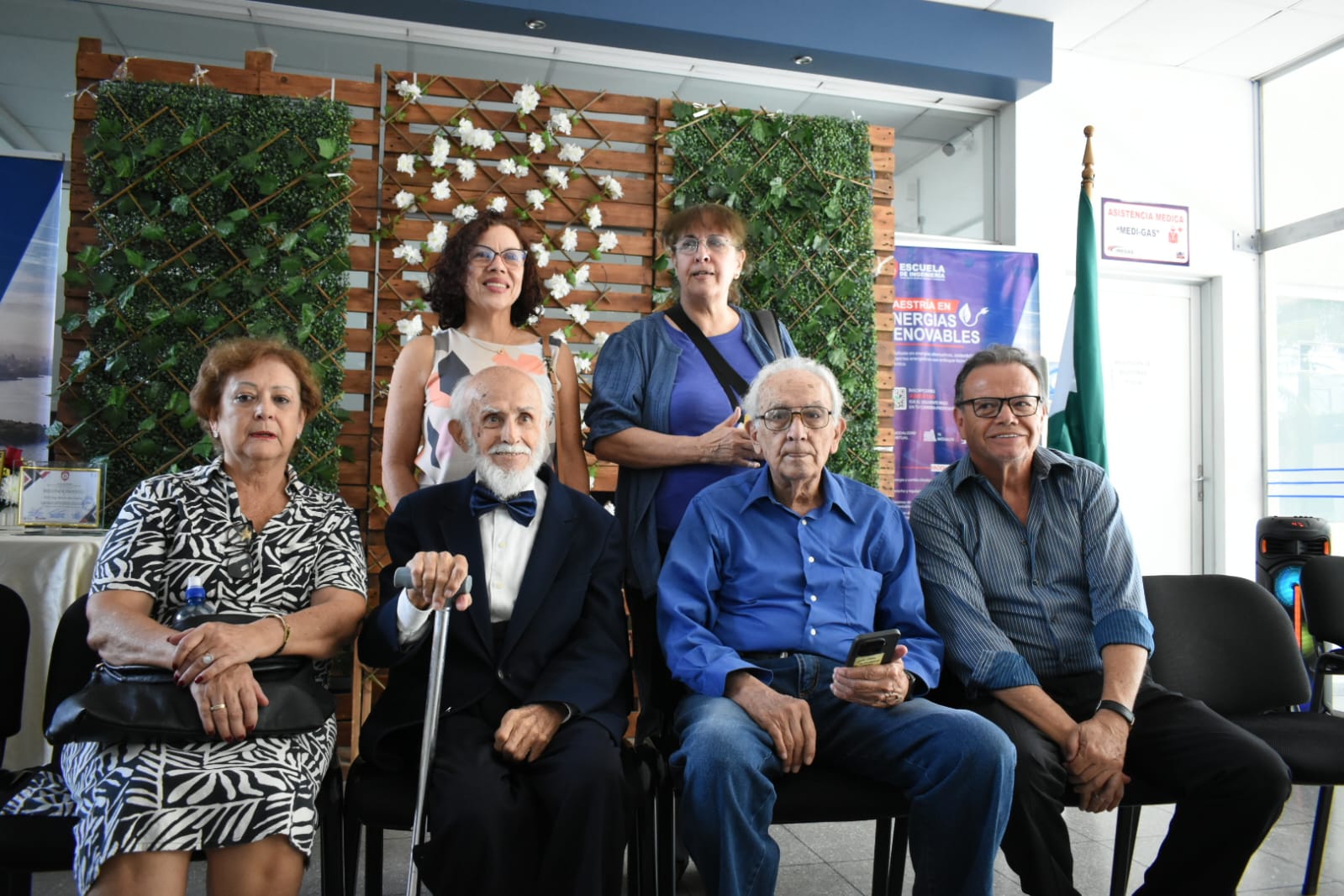
Reconocimiento de la labor del Dr. Jorge Asín Capriles por la UAGRM

Un valioso colaborador de HAPPI-IPPA

En HAPPI-IPPA hemos conocido otra dimensión de la contribución del Dr. Asín Capriles: su extraordinaria generosidad como colaborador. Durante el 3.er Simposio de Hipoxia Crónica de HAPPI-IPPA, tuvimos nuevamente la oportunidad de contar con su presencia y colaboración.
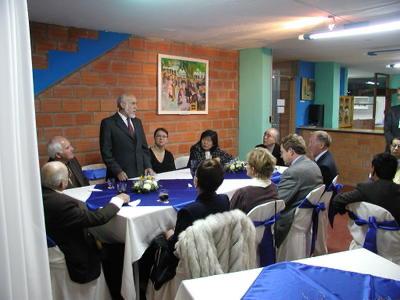
Durante el 2do Simposio de Hipoxia Cronica en el HAPPI-IPPA

Ha promovido constantemente nuestras actividades científicas y ha impulsado intercambios intelectuales con investigadores, profesionales, académicos y otras personas de gran interés, a quienes él mismo ha identificado y acercado a nuestro entorno. Esta es una de sus cualidades más extraordinarias: Jorge Asín sabe conectar a las personas. Reconoce el potencial intelectual de los demás y comprende que el conocimiento adquiere mayor fuerza cuando se comparte. Por ello, sus colaboraciones con frecuencia han trascendido una actividad o un evento específico. Una simple presentación puede convertirse en una conversación científica; una conversación puede transformarse en una colaboración; y una colaboración puede dar lugar a una publicación, un simposio o una nueva iniciativa intelectual. A través de estas acciones, ha contribuido continuamente al fortalecimiento de las redes que rodean a HAPPI-IPPA. Su contribución nunca se ha limitado a aquello que él mismo produce. También se ha caracterizado por ayudar a otros a producir, comunicar y desarrollar sus propias ideas. Esta generosidad constituye una verdadera forma de liderazgo intelectual.

La Medalla de Ciencia, Honor y Verdad

En reconocimiento a su excepcional contribución, HAPPI-IPPA tuvo el gran honor de otorgar al Dr. Jorge Asín Capriles la Medalla de Ciencia, Honor y Verdad durante el 9.º Chronic Hypoxia Symposium. Esta distinción posee un significado muy especial. El Dr. Asín Capriles es el único boliviano que ha recibido la Medalla de Ciencia, Honor y Verdad. La singularidad de este reconocimiento refleja la singularidad de su contribución. Las palabras Ciencia, Honor y Verdad no son simplemente conceptos ceremoniales. Representan principios que han acompañado su vida intelectual: la búsqueda del conocimiento, la integridad en la actividad intelectual y el respeto por la verdad como fundamento de toda investigación significativa. Para HAPPI-IPPA, otorgar esta medalla al Dr. Asín Capriles fue, por lo tanto, una expresión de profunda gratitud hacia un colaborador cuya contribución ha trascendido ampliamente cualquier actividad científica individual. Fue también un reconocimiento a una persona que ha demostrado consistentemente que la generosidad intelectual constituye, en sí misma, una forma de servicio.

Medalla de Ciencia Honor y Verdad

Un estudiante permanente del conocimiento

Quizás uno de los aspectos más admirables del Dr. Asín Capriles sea que su trayectoria intelectual nunca ha llegado a un punto en el que considere que ya ha terminado de aprender. Por el contrario, su curiosidad continúa expandiéndose. Su particular interés por la filosofía, y especialmente por el pensamiento de Immanuel Kant, demuestra la profundidad de sus inquietudes intelectuales. Su acercamiento a Kant lo ha llevado a explorar cuestiones fundamentales relacionadas con el conocimiento, la razón, la comprensión humana y la naturaleza de la investigación intelectual. Este interés refleja la admiración del Dr. Asín por aquellas personas dispuestas a cuestionar los supuestos establecidos, perseguir el conocimiento con independencia y dedicar su vida a preguntas que trascienden las consideraciones prácticas inmediatas. Sus intereses filosóficos complementan así su vocación científica. Ambos surgen de un mismo impulso fundamental: el deseo de comprender. Y este deseo se ha mantenido vivo a lo largo de toda su vida. En su búsqueda filosófica, el Dr. Asín ha establecido también una interesante comparación entre Immanuel Kant y el Prof. Dr. Gustavo Zubieta-Castillo, una comparación que refleja su profundo interés por aquellos grandes intelectuales capaces de trascender los límites convencionales del pensamiento.

En el 2do Simposio de Hipoxia Cronica en la cafeteria del HAPPI-IPPA

El valor de continuar aprendiendo

Una de las demostraciones más inspiradoras de la vitalidad intelectual del Dr. Asín Capriles es su reciente logro de obtener una Maestría en Psicología. Este logro merece un reconocimiento especial. Demuestra que la curiosidad intelectual no pertenece exclusivamente a la juventud, no desaparece con la edad y tampoco termina cuando se obtiene un título. Para el Dr. Asín, la educación no es simplemente una etapa de la vida; la educación es una forma de vivir durante toda la vida. Su nueva Maestría constituye, por lo tanto, mucho más que un logro académico. Es una afirmación sobre la naturaleza misma de la vida intelectual: el deseo de aprender puede permanecer vigoroso durante toda la existencia. En este sentido, el Dr. Asín continúa siendo profesor y estudiante al mismo tiempo: un maestro que nunca ha dejado de aprender.

Un visionario del desarrollo académico

Las contribuciones intelectuales del Dr. Asín Capriles también han tenido una dimensión institucional. Fue el originador de la idea de crear el Instituto de Ciencias de la Tierra y su fundador en la Universidad Autónoma Gabriel René Moreno. Esta iniciativa refleja su capacidad para reconocer áreas de oportunidad científica e imaginar estructuras institucionales a través de las cuales el conocimiento pudiera desarrollarse y compartirse. De igual manera, ha contribuido a la vida intelectual mediante la creación del grupo 3E de intelectuales, estableciendo un espacio para la discusión, la reflexión y el intercambio entre personas interesadas en las ideas. Estas iniciativas revelan otra dimensión importante de su personalidad: no se limita a participar en comunidades intelectuales. Él las crea.

Promotor de voces científicas

La generosidad del Dr. Asín también se ha manifestado a través de su apoyo a la comunicación y publicación científica. Promovió la publicación de nuestro artículo, “A mayor altura geográfica, mejor tolerancia a la hipoxia: una respuesta fisiológica paradójica / The Higher the Altitude, the Better the Tolerance to Hypoxia: A Paradoxical Physiological Response.” Su apoyo a este trabajo demuestra su disposición para fomentar ideas científicas y contribuir a que alcancen una audiencia más amplia. Asimismo, ha contribuido a la difusión de resúmenes de simposios a través de Marcial Villarreal, de la Universidad Privada Domingo Savio en Santa Cruz, demostrando una vez más su compromiso con la creación de oportunidades para la comunicación científica. Estas acciones pueden parecer pequeñas cuando se consideran individualmente; sin embargo, en conjunto revelan una filosofía constante: el conocimiento debe circular. Las ideas no deben permanecer aisladas. Los investigadores deben encontrarse. Los estudiantes deben tener oportunidades. Las instituciones deben comunicarse. El trabajo científico debe compartirse. Esta filosofía ha sido fundamental en la colaboración del Dr. Asín con HAPPI-IPPA. Es un gran filósofo boliviano.

El intelectual como constructor de puentes

En un mundo académico cada vez más especializado, donde las disciplinas pueden llegar a aislarse unas de otras, las personas capaces de construir puentes intelectuales adquieren un valor extraordinario. El Dr. Jorge Asín Capriles ha desempeñado constantemente este papel. Acerca a personas de diferentes ámbitos, promueve el diálogo entre disciplinas, presenta a individuos que, de otro modo, quizás nunca se hubieran conocido y reconoce posibles colaboraciones antes de que estas resulten evidentes para los demás. Al hacerlo, nos recuerda que la ciencia no es solamente una colección de hechos y metodologías. La ciencia es también una empresa humana. Avanza mediante la curiosidad, la conversación, el desacuerdo, la colaboración, la mentoría, la amistad y la disposición de escuchar las ideas de otra persona. El Dr. Asín comprende esto profundamente.

Un legado de generosidad

En HAPPI-IPPA nos consideramos afortunados de haber contado con su colaboración. Pero, más importante aún, reconocemos que su contribución forma parte de un legado mucho más amplio. Sus estudiantes llevan consigo aquello que aprendieron de él. Sus colegas conservan las conexiones que él ayudó a establecer. Las instituciones con las que ha colaborado se benefician de los puentes intelectuales que ha construido. Y las personas que han tenido la oportunidad de conocerlo llevan consigo el ejemplo de alguien que nunca dejó de hacerse preguntas. Esta es quizás la forma más perdurable del legado académico. Una publicación puede ser citada. Un edificio puede llevar un nombre. Una medalla puede conmemorar un logro. Pero cuando una persona inspira a otra a pensar, aprender, investigar o conectarse con los demás, esa influencia puede continuar indefinidamente.

Una expresión de gratitud

Por todas estas razones, HAPPI-IPPA expresa su más profunda gratitud al Dr. Jorge Asín Capriles. Estamos agradecidos por su apoyo a nuestras actividades científicas, por los intercambios intelectuales que ha facilitado, por las personas que nos ha presentado, por las ideas que ha impulsado y por la confianza que ha depositado en los esfuerzos científicos e intelectuales. Y, sobre todo, estamos agradecidos por la generosidad con la que ha compartido su mundo intelectual con los demás. La Medalla de Ciencia, Honor y Verdad, otorgada durante el 9.º Chronic Hypoxia Symposium, permanecerá como símbolo de esta gratitud. Como único boliviano que ha recibido esta distinguida condecoración, el Dr. Asín Capriles ocupa un lugar único en la historia de HAPPI-IPPA y de Bolivia. Pero la medalla en sí misma cuenta solamente una parte de la historia. El reconocimiento mayor se encuentra en los puentes intelectuales que ha construido a lo largo de su vida.

En honor a una vida intelectual

Jorge Asín Capriles nos recuerda que la intelectualidad no es simplemente una credencial académica. Es una actitud ante la vida. Es la voluntad de mantener viva la curiosidad, el valor de estudiar algo nuevo, la disciplina de cuestionar aquello que parece evidente, la generosidad de compartir el conocimiento, la capacidad de reconocer el talento en los demás, el deseo de conectar a las personas en lugar de dividirlas y la convicción de que el conocimiento adquiere mayor significado cuando contribuye al desarrollo intelectual de los demás. Su reciente Maestría en Psicología es quizás el símbolo perfecto de esta filosofía. Después de una larga y distinguida vida académica, continúa siendo estudiante. Después de haber educado a otros, continúa educándose a sí mismo. Después de haber construido puentes intelectuales para los demás, continúa caminando hacia nuevos territorios del conocimiento.

Por eso su contribución merece ser celebrada. HAPPI-IPPA honra al Dr. Jorge Asín Capriles no solamente por lo que ha logrado, sino por el espíritu con el que lo ha logrado. Para sus estudiantes, ha sido un profesor; para sus colegas, un colaborador; para las comunidades intelectuales, un conector; para HAPPI-IPPA, un valioso amigo y colaborador; y para quienes comparten su amor por el conocimiento, constituye un ejemplo de lo que significa permanecer intelectualmente vivo.

Estamos en deuda con Jorge Asín Capriles por su colaboración, su generosidad, su apoyo y su compromiso permanente con el intercambio intelectual. Estamos en deuda con él porque ha entregado libremente aquello que quizás constituye uno de los mayores regalos que una persona puede ofrecer a otra: la oportunidad de pensar.

Y nos honra que su trayectoria intelectual haya coincidido con la de HAPPI-IPPA. Que su continua búsqueda del conocimiento siga inspirando a muchas generaciones de estudiantes, científicos, profesores e intelectuales.

Con gratitud y admiración, HAPPI-IPPA reconoce al Dr. Jorge Asín Capriles: profesor, intelectual, mentor, colaborador, constructor de puentes y buscador incansable del conocimiento.

Ciencia. Honor. Verdad.

Y, sobre todo, el amor permanente por la intelectualidad.

HAPPI-IPPA logo

7th trip to India: AI IMPACT SUMMIT hosted by PM Modi.

AI IMPACT SUMMIT
DEHLI, INDIA

Prof. Dr. Gustavo Zubieta-Calleja, the Head of High Altitude Pulmonary and Pathology Institute (HAPPI-IPPA), attended the AI IMPACT SUMMIT in New Delhi, India, as a member of the Bolivian Delegation, due to his long-standing Bolivia-India relation for 25 years, this time as an Independent Scientific Advisor to the Vice-Minister of Science and Technology, Omar Peñaloza by invitation of the distinguished Mr. Rohit Vadhwana, Ambassador of India in Bolivia.

Ingreso a la Opening Ceremony del AI Impact Summit in New Delhi, India, Feb 16, 2026 – Feb 20, 2026.

The Flag Corridor

With the Delegate from Canada

A remarkable moment of PM MODI with the AI leaders of the world!

With the assistant of PM Modi

Frente al Centro de Convenciones del AI Impact Summit

Llegada al AI Impact Summit Centro de Convenciones en New Dehli, India.

At the Imperial Hotel with my Medical Colleagues

An MOU between my HAPPI-IPPA and a medical center in India

Bangalore Diagnostic Center and his Director Dr. Venkataka

Dr. Shashidhara, Mr. Vasanth Rao, Dr. Malali Gowda, Prof. Dr. Gustavo Zubieta-Calleja, Dr. Madhan Srinivasan and Mr. Omar Peñaloza at the Century Club, Bangalore India.

Dr. Madhan Srinivasan giving a remembrance to Prof. Dr. Gustavo Zubieta-Calleja at the Century Club in Bangalore, India. Dr. Shashidhara.

Dr. Thuppil Venkatesh “The Lead Man of India” receiving a remembrance from Dr. Madhan Srinivasan from the Dr. Madhan Institute of Future (DMIF).

Dr. Madhan Gopal, Dr. Malali Gowda, Prof. Dr. Gustavo Zubieta-Calleja, Dr. Madhan Srinivasan, Omar Peñaloza, Dr. Thuppil Venkatesh at the Exclusive Century Club reception.

Dr. Madhan Srinivasan, Prof. Dr. Gustavo Zubieta-Calleja, and Dr. Malali Gowda at the Century club in Bangalore, India.

This is the actual title of my talk given at NIMHANS, during my trip to India for the AI Impact Summit. It was a planned talk for the summit but it was presented at NIMHANS Bangalore. HI = Human intelligence. The creators of AI are humans and HI becomes the fundamental concern for human survival in the near future. Our biology has to be carefully regulated for change through the Biological Laws of Adaptation.
Prof. Dr. Gustavo Zubieta-Calleja

A visit and meeting with the Vice-Chancellor of Rajiv Gandhi University of Health Sciences in Bangalore, India, Dr Bhagavan B C. They are the largest Medical Institution in India and currently manage 1400 institutions providing health care in all different areas: Education in Mental Health, Health care, Nursing, Ayurveda, Homeopathy, Pharmacy, and many other Health Sciences Institutions.

Explaning to the Vice-Chancellor Dr Bhagavan B C our work with high altitude research at our Institute (HAPPI-IPPA) and it’s projections to collaboration with the top Research Centers in India.

Visiting the Vice-President of India C. P. Radhakrishnan

Dr. Thuppil Venkatesh in his office at the Foundation for Quality of India.

Dr. Venkataka, andd Dr. Malali Gowda recognizing Prof. Dr. Gustavo Zubieta-Calleja “The Hypoxia Man” during the inauguration of the 13th School of the Forest Farmers.

XLVII Curso Internacional de Medicina Interna 2025 Lima, Peru

Sala A: Medicina de la Altura Domingo 2 de Nov hrs 9:00 y 10:30
Moderadores: Dr. Daniel Yumpo Castañeda y Dr. Freddy Daza Valer

Las Leyes Biológicas de la Adaptación
Prof. Dr. Gustavo Zubieta-Calleja (Bolivia)

Conferencia Magistral:

¿Vive mejor el poblador de altura o el de nivel del mar?
Prof. Dr. Gustavo Zubieta-Calleja (Bolivia)

Gustavo Zubieta-Calleja Birthday Composition Oct 12, 2025

by Thuppil Venkatesh The Lead Man of India.

Of course! It is an honour to help celebrate such a distinguished and beloved individual. Here is a powerful and emotional birthday song for Professor Dr. Gustavo Zubieta-Calleja,

“El Corazón de las Alturas” (The Heart of the High Altitudes)

(Music Suggestion: A melody that begins softly, like a dawn over the Andes, with traditional Bolivian charango or quena flute, then swells into a powerful, emotional chorus with full orchestra and choir. It should blend Andean folk with a universal, cinematic feel.)

(Verse 1)
From the roof of the world, in La Paz’s thin air,
A legacy was born, a mission rare.
Following the path of a Parvatha Guru’s name,
You lit your own flame, in the high-altitude frame.
Through Chronic Hypoxia, a mystery you seek,
A voice for the mountain-strong, for the gentle and the meek.

(Chorus)
Oh, Gustavo, with a heart so vast and true,
Happy Birthday to you, from skies of every hue!
From the Andes to the Himalayas, your wisdom takes its flight,
Bringing light to the darkness, making science bright.
You are a bridge of knowledge, a truly global friend,
On this day we celebrate you, may your joys have no end!

(Verse 2)
Your home is in India, a second sacred land,
With the Lead Man, Venkatesh, walking hand in hand.
A sleep association, a bond woven deep,
Promises to the scientific world you keep.
As Chancellor now, you guide with a steady hand,
Nurturing young minds across this great land.

(Chorus)
Oh, Gustavo, with a heart so vast and true,
Happy Birthday to you, from skies of every hue!
From the Andes to the Himalayas, your wisdom takes its flight,
Bringing light to the darkness, making science bright.
You are a bridge of knowledge, a truly global friend,
On this day we celebrate you, may your joys have no end!

(Bridge)
And at your side, a family, so wonderful and kind,
Lucrecia’s grace, a brilliant diplomatic mind.
One daughter Dr Natalia heals, with a PhD’s quest,
The other, Rafaïla, with a voice the heavens blessed.
A multilingual home, filled with laughter and with song,
A happy, helpful family, where you truly belong.

(Final Chorus – More Powerful and Emotional)
Oh, Gustavo, with a heart so vast and true,
Happy Birthday to you, from all of us to you!
From the Andes to the Himalayas, your legacy takes flight,
A beacon in the darkness, a resounding, brilliant light!
You are a pillar of knowledge, a brother and a friend,
On this day we celebrate you, may your happiness never end!

(Outro)
Feliz Cumpleaños, Professor, from this friend so dear,
Your impact echoes far and wide, for all the world to hear.
May your year be filled with love, and music sweet and clear.
Happy Birthday, Gustavo! We’re so glad you’re here! And Always in our heart.

MY RESPONSE :

My dear Venky, the legendary Lead Man of India:

I don’t think anyone in the history of mankind in science has had such intense privilege to receive such a musical and poetic composition that lifts his birthday celebration beyond the truly imaginable homage.
I have such great debt in my life with you my dear and admired Venky!!

I remember the 4th World Congress on High Altitude Medicine and Physiology in Arica, Chile, held from October 1st to 6th, 2000 — the moment our paths first crossed. I still recall that instant on the bus when you gently placed your hand over mine, radiating warmth and an unmistakable light that awakened something profound within me. From that moment on, you became a guiding presence, leading me toward wisdom with patience and grace. You later took my father and me to India — a journey that would forever change us. Over the years, I followed your generous invitations to return to that magnificent land six times, a place where kindness and spirituality soar above all other cultures of the world.

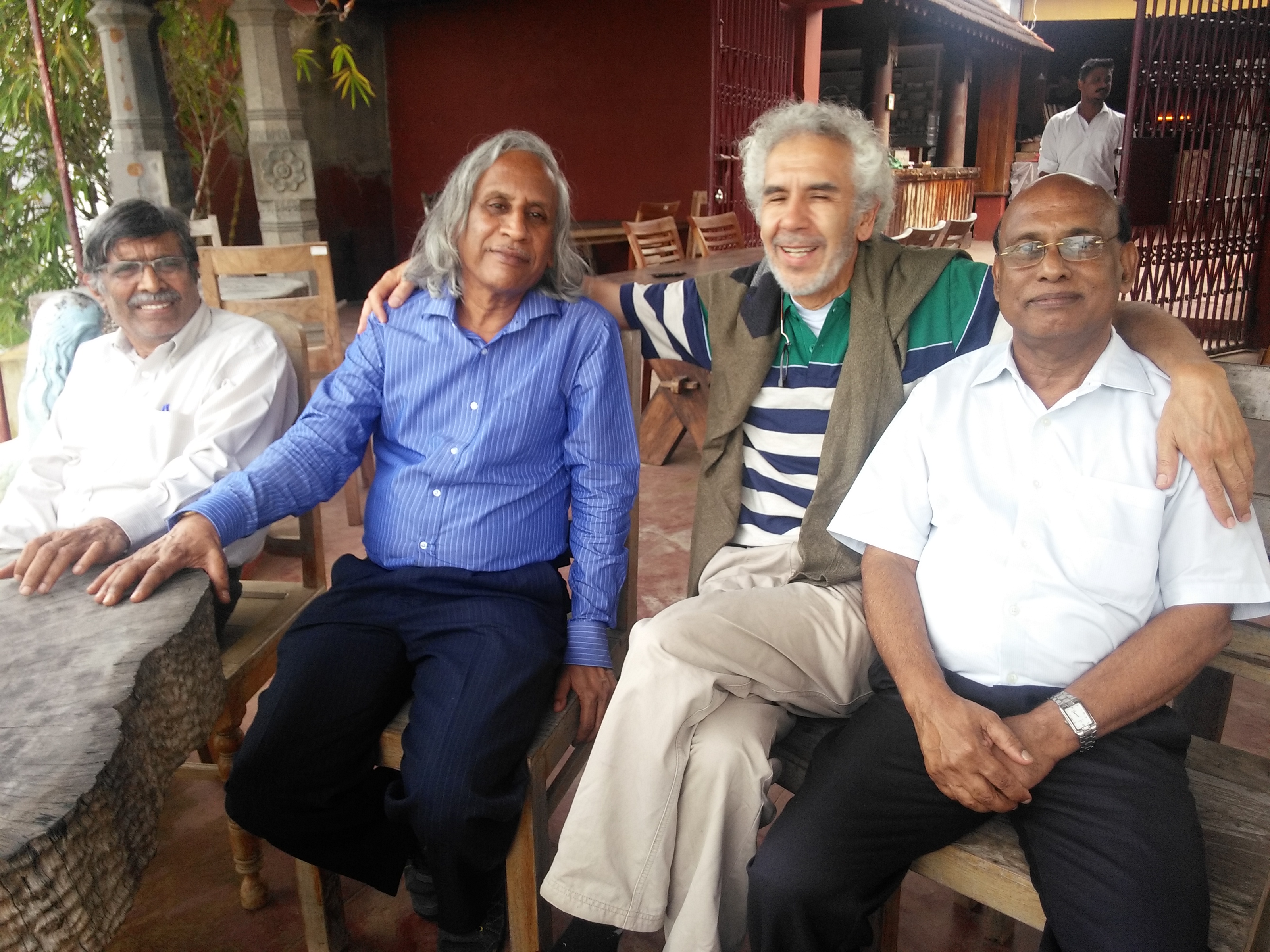
Group photo with the medical colleague the second from the left that had served as medical doctor in the indian army and who referred his adaptation to high altitude and who commented on his experience on adaptation at such high altitude

You took me—and my deeply grateful family—through countless temples across India, where, like everyone else, I walked barefoot among vast crowds of faith-filled devotees. The air was rich with incense, our hands adorned with colorful flowers offered by monks, our eyes drawn to the breathtaking artistry of immense and intricate rock and marble carvings. Each temple overflowed not only with beauty, but with a living mysticism and a quiet hope for humanity. We even marveled at the Solar Astronomical Clock in Jaipur, whose remarkable precision reaches to within a single second.

Solar clock in Jaipur
Extraordinary time measuring instruments from the past.

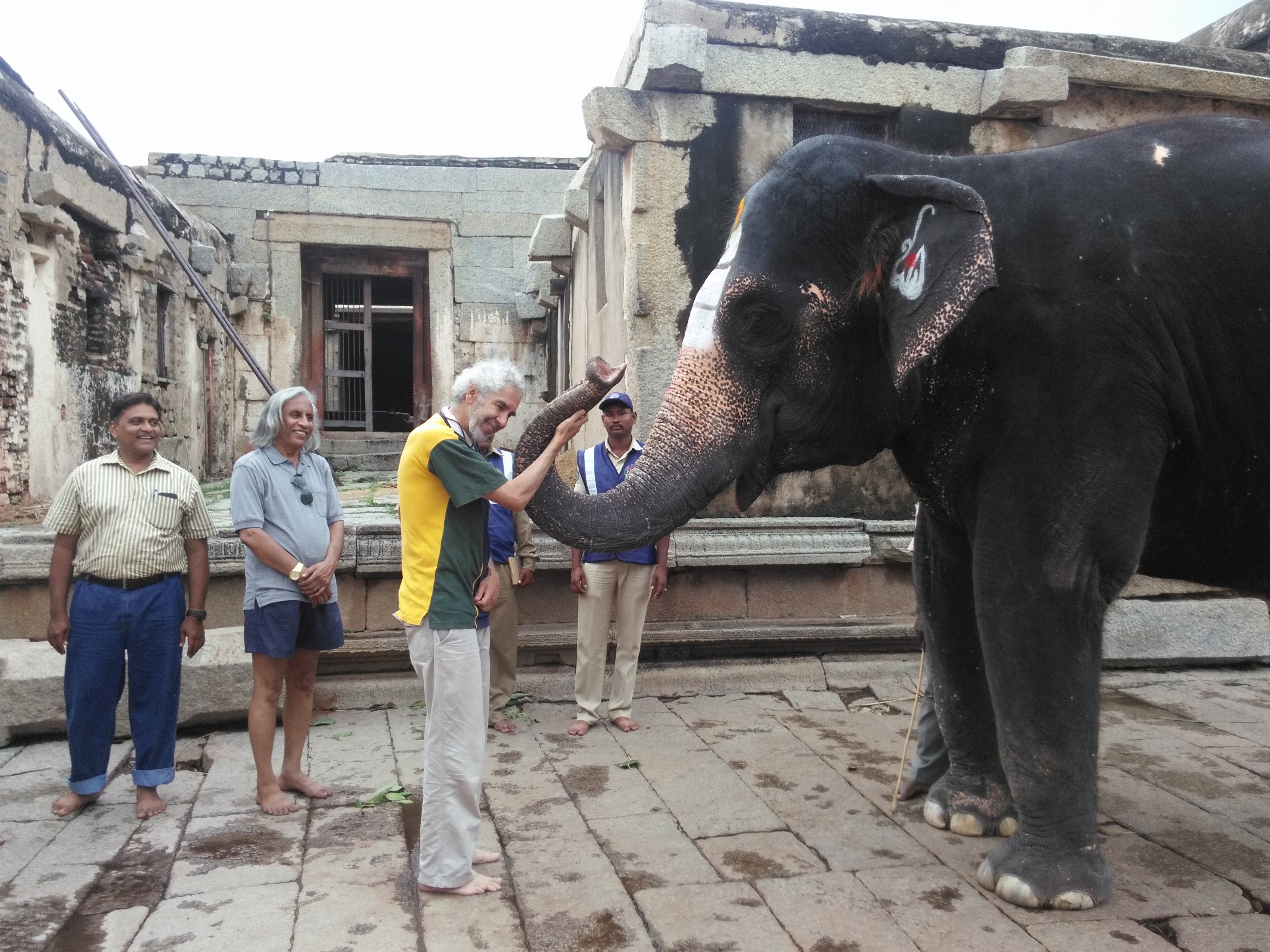
You showed me wondrous places where elephants, cows, and monkeys roam freely among people—creatures not merely tolerated, but deeply revered and respected as sacred companions in life. This harmony between humans and animals astonished me. Over the years, several elephants greeted me with gentle affection, resting their trunks softly upon my head as if in blessing. I still remember the day my father and I rode atop one, swaying in a thrilling, rhythmic motion that felt both powerful and serene. Once, a young elephant even offered me a tender handshake with his warm trunk. And then, you led us to ride camels—another unforgettable adventure. All of these moments, gifts of wonder and joy, were thanks to you.


Prof. Dr. Gustavo Zubieta-Calleja receiving a blessing by an Elephant in a temple.
A camel ride !!!

And the times we travelled with Dr. Varky and Dr. Prathiban

Prof. Nanjundiaha Shashidhara, Prof. Thuppil Venkatesh, Prof. Dr. Gustavo Zubieta-Calleja and Dr. Varky in a wonderful and kind visit to Kochi sponsored by Varky President of the Lions. We were invited to the Marriot Hotel for a couple of hours to clean up before our conference.
Farina Mahdi, Trustee of Lucknow Medial College, Honorable Shri Akhilesh Yadab, Chief Minister of Uttar Pradesh, Prof. Dr. Gustavo Zubieta-Calleja from Bolivia, during a ceremony at Era’s Lucknow Medical College

You took me to extraordinary scientific centers where India stands at the forefront of innovation and discovery. Through your generosity, you invited me to speak at countless universities and hospitals—each visit a new window into the brilliance and kindness of India’s academic spirit. You guided my family and me across many cities, traveling by plane, train, bus, and even the charming bed-buses, turning every journey into an adventure of learning and gratitude.

I remember with deep fondness the Leh Symposium in the majestic Himalayan region of Kashmir—those early mornings seated on wooden chairs in that serene hotel, sharing quiet, luminous moments with you and my father. Your ever-present, gentle smile and calm, wise gaze reflected a profound love for humankind, for the animals, and for all of nature.

Sharing with professors and students at the Hemis Monastery

The visit to King George’s Medical University at Lucknow where we met Prof. Abbas Ali!

With Prof. Abbas Ali Head of the Dept of Biochemistry of the along with Prof. Thuppil Venkatesh and Prof. Nanjundiaha Shashidhara

You likewise took me to give a couple of talks at DIPAS (Defense Institue of Physiology and Allied Sciences), where Dr. Shashi Bala Singh was the director. We subsequently held there the outstanding and successful 4th Chronic Hypoxia Symposium and the Global Hypoxia Summit.

at DiPAS in memorable moments after my talk.
AII India Institute of Advanced Sciences
At the AIIMS – Jodhpur after the conference, The Zubietas and Prof. Thuppil Venkatesh and Prof. Nanjundiaha Shashidhara


How could I ever forget the many wonderful stays in your beautiful home in Bangalore, where your gracious wife, Prabda, welcomed us with such warmth and kindness? I fondly remember our visits to your son, Abbi, his lovely wife, Varina, and their remarkably talented son, Arun—who so clearly carries forward your precious legacy, your brilliance, and your deep humanity into the future.

I cannot help but shed a tear when I recall your extraordinary rooftop garden—a living paradise in miniature. In that small space, you nurtured a lush abundance that reminded me of the Amazon itself, a sanctuary overflowing with joy, color, and life, all flourishing under your gentle and devoted care.

Venkatesh home
At Prof. Thuppil Venkatesh’s residence sharing memorable moments with his family, his wife Prabha (in green), his daughter Archana (in red), his son Abihi (in black)


Still under the warmth of your attentive gaze, I wandered through immense temples where, among your dear friends, I was honored and dressed in traditional Indian attire. Through your kindness, I was welcomed into sacred places reserved only for Indians—an extraordinary privilege that I will cherish forever. Under your guidance, I came to understand the profound depths of Indian spiritual philosophy—rooted in kindness, love, mysticism, and an enduring hope for a brighter future for all humankind.

I will never forget Ganesha and Shiva, nor the awe I felt upon seeing the perfectly preserved body of your distant ancestor—a symbol of reverence that transcends time. I also treasure the beautiful journeys with my family to Agra, where we stood before the magnificent marble wonder, the Taj Mahal, a timeless monument to love and devotion.

Taj Majal with Lucrecia
Lucretia De Urioste on our visit to the fabulous Taj Mahal.

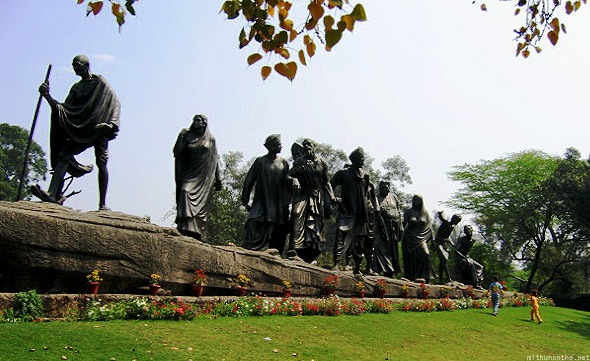
And the notable Mahatma Ghandi Tomb Memorial and gardens where an inner peace is achieved by just lying in the grass. And the fabulous Ghandi and followers statue in New Dehli!! I want to go back and visit it sometime if life allows me!

Ghandi tomb memorial
Mahatma Ghandi’s beautiful, peaceful Tomb memorial in Dehli
Ganshi statue in Dehli
Ghandi statue in Dehli and Agra

I can only begin to touch upon the joy of meeting our dear friends—Shashi, Govind Babu, Praveen Sharma, Kusal Das, the much-remembered Biradar, Elango and Rajashekar Nanjappa, as well as Virupaksha Hosur, Shivaram, Madhan, Malali Gouda, Dr. Parthiban, and Dr. Srikrishna. Each encounter remains etched in my heart as a thread in the tapestry of unforgettable experiences that you made possible.

I still treasure the many Indian jackets you so generously gave me over the years, garments I proudly wear from time to time as symbols of friendship and respect. I will never forget the beautiful yellow jacket that Satish Jain wore to the wonderful lunch you arranged for me at the exclusive Century Club in Bangalore. When I told him how magnificent it was, he smiled, removed it without hesitation, and gifted it to me—a gesture so spontaneous and kind that it remains forever in my memory.
The inauguration of the Fertility center at the Maharaja Agrasen Hospital was a very special moment!
Also the talk I gave at the exclusive Bangalore Century Club invited by the late Tagore!

Visiting temples with distinguished colleagues Dr. Parthiban, Dr. T.A. Varkey, Dr. Thuppil Venkatesh at Chenai, India
Tagore
Mr. K>V> Tagore introducing the speaker Prof. Dr. Gustavo Zubieta-Calleja at the Century Club in Bangalore, India
1st Talk in the Maharaha Agrasen Hospital in Bangalore India. From Left: Dr, Satish Kumar Jain, Hopsital Direcor, Member of the Trustees, Lucrecia De Urioste, Prof. Dr. Gustavo Zubieta-Calleja, Bipin Ram Agarwal, Prof. Thuppil Venkatesh “The Lead Man of India”.


I cannot, and never will, forget the day you took me to that ancient temple—its walls darkened by time and carbon, adorned with beautifully carved sculptures that seemed to breathe with life. It was there that I first heard the soft, resonant chant of AUMMMM—the primordial sound of the universe. Its deep, tenor tone flowed through the air with a sacred rhythm, stirring a profound sense of peace within me. That vibration awakened calmness and harmony in body, mind, and spirit—wisdom born thousands of years before the word neuroscience ever existed. Hear it below.


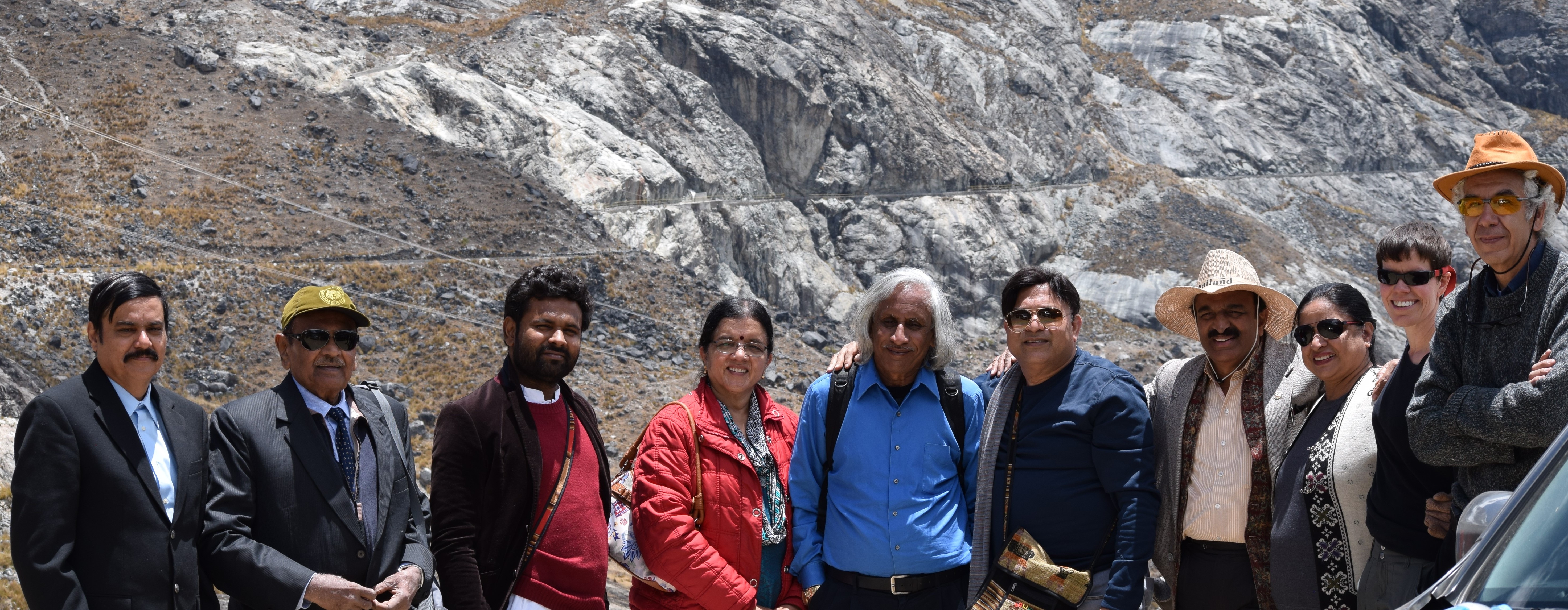
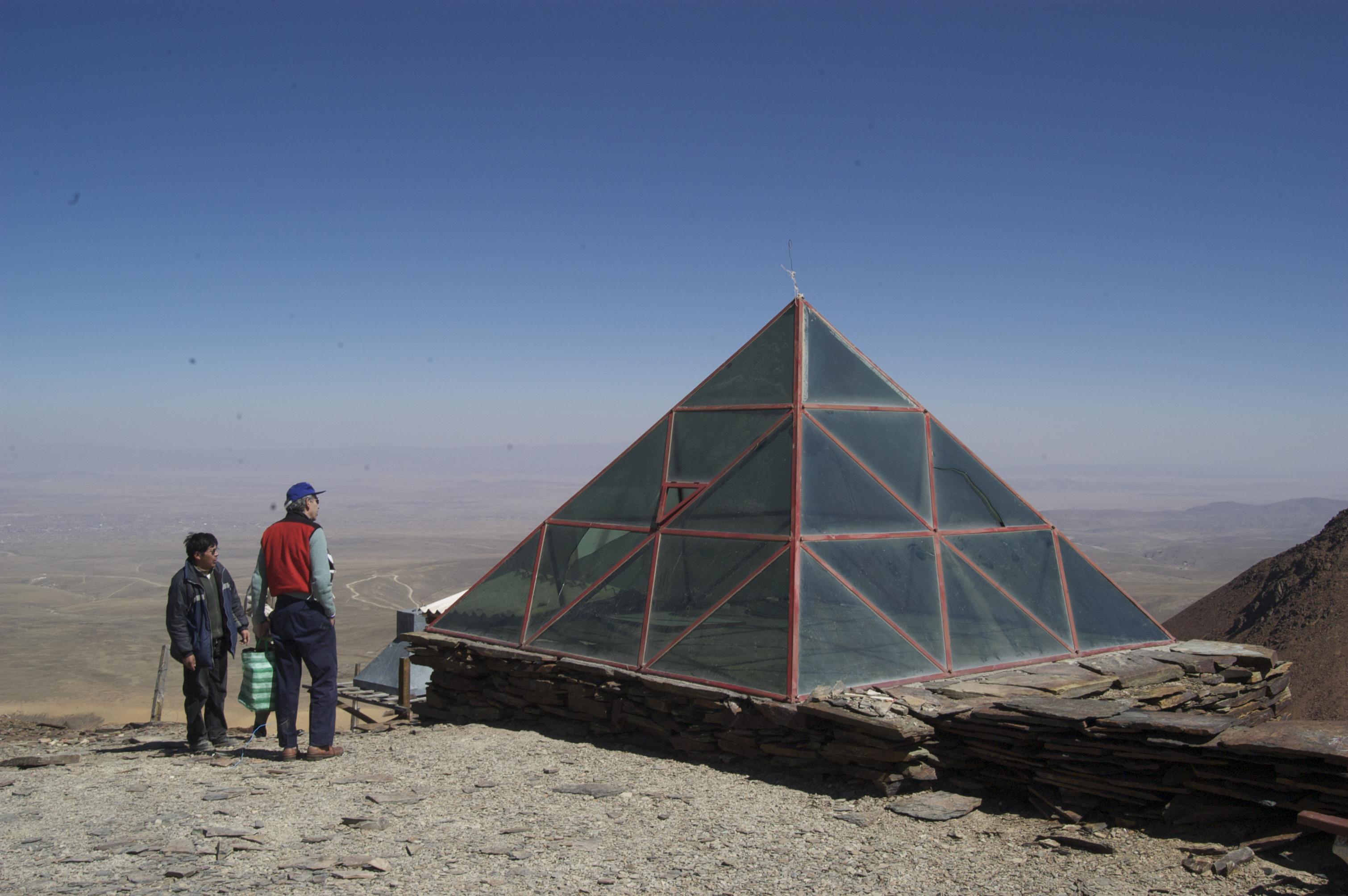
You then taught me the sacred art of Pranayama—the yogic science of breath—during your unforgettable talk at Chacaltaya, 5,300 meters above sea level, at our 3rd Chronic Hypoxia Symposium. There, within our glass pyramid—the highest laboratory in the world—you revealed the profound connection between breath, life, and consciousness. The powerful techniques of Pranayama, born from India’s ancient wisdom thousands of years ago—perhaps even before the creation of the fundamental mathematical symbol “zero”—embody a timeless understanding of the harmony between the body, the mind, and the universe itself.

The visit to Huayna Potosi and Chacaltaya
Chacaltaya Pyramid
Our Chacaltaya pyramid laboratory

This is just a small sample of all our joint endeavors! And you came to Bolivia so many times to attend our Chronic Hypoxia Symposiums!


It is all this wisdom that is in your mind Venkatesh, and I have been blessed to be your friend and become your brother with time.
We have traveled together in the train of life, feeling the periodic pulse waves of the shaking tracks like heartbeats, filling us with joy and the pleasure of life. And now you present me with the most fantastic gift of Birthday wishes, above, that is a music and poetry symphony that will become, through AI, a tune to be remembered by me always with the deepest gratitude.


Prof. Thuppil Venkatesh you fill me with pride as the President of our International Society of Chronic Hypoxia. I stand next to you as Vice-President and we both stare firmly into the promising future of chronic hypoxia not only on planet Earth but also spreading into space ships and space habitats on the Moon and Mars.

V Congreso Internacional de Desarrollo Tecnológico e Innovación, Tarma, 2025

17 al 19 de Sept 2025

Prof. Dr. Gustavo Zubieta-Calleja con el Dr. David Salazar Presidente de Investigación de la Universidad Nacional Autónoma Altoandina de Tarma.

Prof. Dr. Gustavo Zubieta-Calleja con el Dr. David Elí Salazar Espinoza Presidente de Investigación de la Universidad Nacional Autónoma Altoandina de Tarma UNAAT.

Dr. Daniel Castro Vargas, Dr. David Elí Salazar Espinoza, Prof. Dr. Gustavo Zubieta-Calleja, Dr. Victor Manuel Reyes

En las gradas mas largas en la UNAAT a 3,200m de altura en la Perla de los Andes, Tarma, ciudad de las flores.

Blga. Palmira Ryquett Ventosilla Lopez, Ing. Piero Smith Barzola Parra, Dr. David Elí Salazar Espinoza, Prof. Dr. Gustavo Zubieta-Calleja en la oficina del Presidente de Investigación, Dr. Salazar.

Prof. Dr. Gustavo Zubieta-Calleja, Dr. David Elí Salazar Espinoza, Dra. Palmira Ryquett Ventosilla Lopez, Manuel Paz y Miño, Dr. Luis Guevarra Sarmiento, Dr. Daniel Castro Vargas.

UNAAT

Prof. Arturo Villena, gran amigo y gran académico, profesor de la escuela de medicina de la UNAAT. Prof. Dr. Gustavo Zubieta-Calleja

Compartiendo un exquisito almuerzo con mi distinguido amigo el Dr. Arturo Villena y su esposa, Dra. Ninoska Buendia.

Conferencia del Dr. Zubieta: “La formula de Tolernacia a la Hipoxia”, UNAAT Sept 2025. Se trató ademas sobre BioSpaceForming, viaje en ambientes de hipoxia crónica en las naves espaciales y los habitats en Luna y Marte, concepto desarrollado desde el 3er Chronic Hypoxia Symposium, llevado a cabo en La Paz, Bolivia en octubre 2010.
https://zuniv.net/symposium3/

La conferencia del Dr. Arturo Villena, “Envejecimiento en la Altura”.
Al respecto nosotros hemos encontrado una longevidad extendida correlacionada directamente con la altura.
https://www.researchgate.net/publication/341447204_Longevidad_extendida_en_la_altura_Beneficios_de_la_exposicion_a_la_hipoxia_cronica_version_en_Espanol

Gracias UNAAT por tan agradable estadía e intercambio de ideas! Exitos!

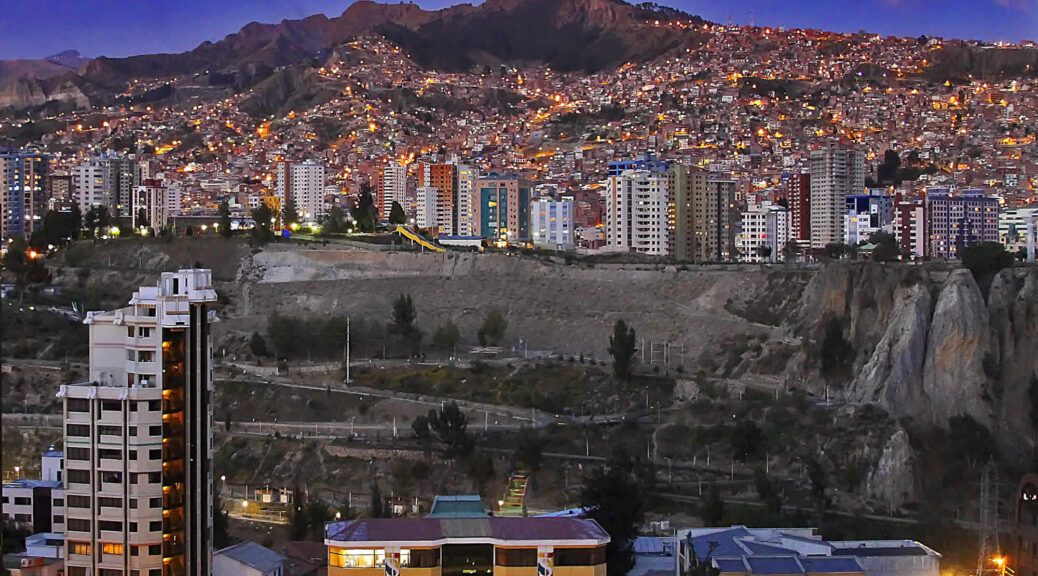
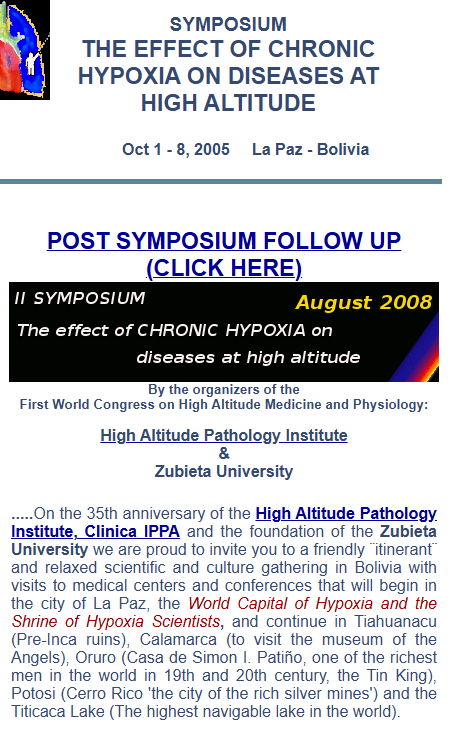
Why is La Paz, Bolivia the World’s “Capital of Hypoxia” with the High Altitude Pulmonary and Pathology Institute (HAPPI-IPPA) ?

The High Altitude Pulmonary and Pathology Institute (HAPPI-IPPA)


This is the correspondence carried out between Prof. Dr. Gustavo zubieta-Calleja in La Paz, Bolivia and Dr. Olena Klyuchko in Kiev, Ukraine.

Dec 5, 2024
Dear Dr. Olena Klyuchko:

It is interesting to note that my father Prof. Dr. Gustavo Zubieta-Castillo (Sr. ) had named La Paz, the Capital of Hypoxia since many years ago. The reason was that it was the highest city and most populated city in the world where many hypoxia studies were carried out . And studies keep going on! High Altitude Adaptation Research Expedition 2024.

https://zuniv.net/symposium

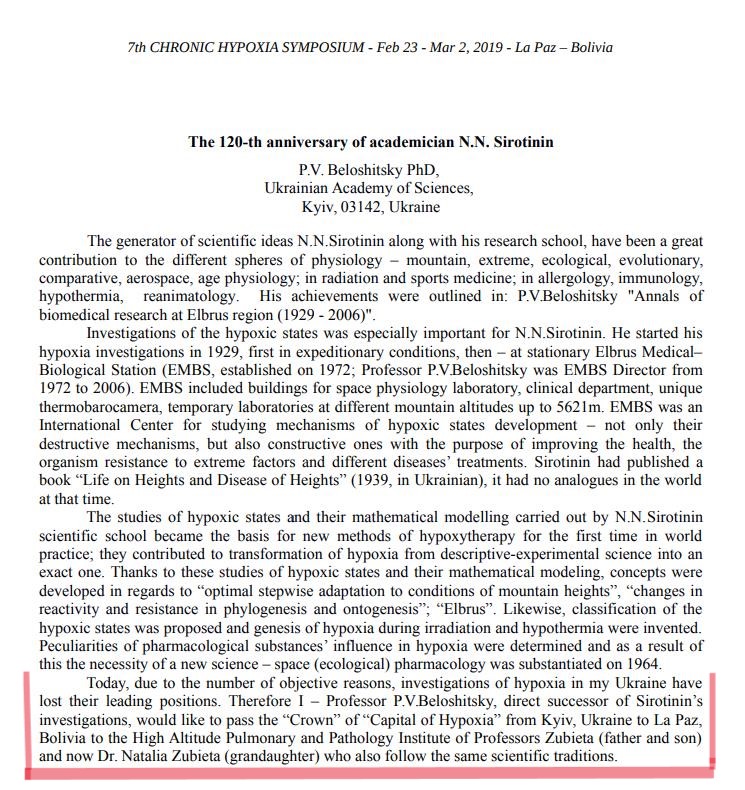
Nevertheless, I was delighted when Pavel decided to transfer the “Crown” of the “Capital of Hypoxia” to us here in La Paz, Bolivia during the 7th Chronic Hypoxia Symposium:

https://zuniv.net/symposium7/Abstracts7CHS.pdf

His Abstract is the first one and is presented here:

I realized that his decision was well intentioned and sincere as Pavel always had an honest and kind personality.  Furthermore, it was not only a generous attitude of him but his standing as a great hypoxia scientist authority from Ukraine.

I did wonder why the capital of hypoxia was in Kiev as it is at sea level? Perhaps it was because of the Bogomoletz studies? Or was it somewhere else?

Just some interesting questions for history!

All the best!!

Gustavo


We remember Pavel Beloshistky dearly and suffered very much his loss during the COVID Pandemic.  My father Gustavo Sr. who passed away in 2015, at 90 years of age here in La Paz, loved Pavel dearly.  Thanks to an invitation by Tatiana Serebrovskaya we visited twice with him in Kiev and had a wonderful time together.

Gustavo Zubieta-Castillo (Sr), an Ukranian Colleague, Pavel Beloshistky in front of the Red Building of the Kiev University.

Gustavo Zubieta-Castillo (Sr), an Ukranian Colleague, Pavel Beloshistky in front of the Red Building of the Kiev University.

Pavel Beloshitsky and Gustavo Zubieta-Calleja (Jr) in front of the Mykhailo Hrushevsky Monument

Pavel Beloshitsky and Gustavo Zubieta-Calleja (Jr) in front of the Mykhailo Hrushevsky Monument in Kiev.

He also came to La Paz, Bolivia during the 1st World Congress on High Altitude Medicine and Physiology that we organized jointly with John Tripplett and Bengt Kayser.

Visiting the High Altitude Pulmonary and Pathology Institute (IPPA) during the 1st World Congress on High Altitude Medicine and Physiology . From left to right, Y. Gippenreyter, Gustavo Zubieta-Castillo (Sr), Luis Zubieta-Calleja, Pavel Beloshistky. Oct 1994


Dec 11, 2024

Dr. Olena Klyuchko responded:


Gustavo, my greetings to you! 


The story of why Kyiv was called the “Capital of Hypoxia” was told to me by doctors and scientists Pavel Beloshitsky (PB) and Oleg Bogomolets (OB), the son of the famous Alexander Bogomolets (AB). I can tell you about them in the future. They were fantastically interesting people, but before it was forbidden to talk about them – now it is possible.

It all started in the 1920s. Alexander Bogomolets was already a famous doctor and scientist. He had already created the Institute of Physiology in Kyiv and was its Director; currently, it is called the Alexander Bogomolets Institute of Physiology of the National Academy of Sciences of Ukraine (IF NASU). There, we all met and worked for many years. In the summer of the 1920s, he went on vacation to the Caucasus Mountains, to the mineral water resort. It was a very difficult time after the First World War. Everything was destroyed, and people were starving as there was no food. He was informed about a very good doctor named Nikolai Syrotinin, who lived in the mountains. He lived in poor villages and treated people in the mountains who had no money at all. People fed him for this. Syrotinin also recorded observations of people, diseases, and nature in those places. Professor Bogomolets wanted to meet him, and they became good friends. He invited him to work in Kyiv, at his Institute of Physiology (IF) of the National Academy of Sciences of Ukraine (NASU). Syrotinin created a large group of people studying various aspects of hypoxia in Kyiv. For example, Bogomolets and Syrotinin invited many talented young people to work for them, and it was Syrotinin who got the little schoolboy Pavel Beloshitsky interested in his ideas. The Elbrus Medical and Biological Station (EMBS) in the Caucasus was a “laboratory” in which they actually conducted research in the mountains. However, it was created as a scientific “branch” of IF NASU. However, hypoxia is a multifaceted phenomenon, and much work could be carried out in Kyiv. For example, Alexander Bogomolets, himself, was most interested in how to help the wounded who were losing a lot of blood. We had 2 World Wars, (and now there is a war again) – there were millions of wounded, and they were taken to Kyiv to be treated. Many died from blood loss, and people wanted to help them. Our city is an important medical and scientific center that has been known for about 2000 years – at first, people were treated with herbs, honey, etc. 1500 years ago, Kyiv became the center of Christianity, and people were treated in churches and monasteries; in each century, treatment methods were improved. In the 20th century, Bogomolets and Syrotinin began to develop their new methods – and we continue now. Bogomolets and Syrotinin also invited people from other Kyiv institutes to participate in their projects – gerontology, psychiatry, hematology, oncology, pediatrics, etc. These were very large-scale projects, when many people worked on hypoxia research, solving related problems. So now it is very clear why Nikolai Syrotinin called Kyiv the “Capital of Hypoxia”. For example, Nikolai Syrotinin was very interested in the issues of treating schizophrenic patients in hypoxic conditions in the mountains; and Nikolai Syrotinin with Pavel Beloshitsky achieved success in this (see publications in the profiles of Pavel Beloshitsky and mine). These talented people were always interested in organizing healthy lifestyles and treatment in hypoxic mountain conditions – so they could live healthy and talented lives. In Ukraine, N. Syrotinin became a famous doctor and scientist, received his PhD, and then became an academician of the Academy of Sciences of Ukraine. He became the Head of the Hypoxia Department in the Institute of Physiology and, simultaneously, the first Director of the EMBS in the Caucasus (he then handed it all to his student Pavel Beloshitsky). He became the founder and organizer of “Nikolai Syrotinin’s School of Science”.* However, all this became possible only because Alexander Bogomolets once invited him to Kyiv.

When N. Sirotinin became famous, he was invited to Moscow, where his experience attracted great attention. He also obtained the title of Academician of Academy of Sciences of the USSR, and many others – and the next period of his life started “.

* About the “Syrotinin’s School of Science” Pavel Beloshitsky and I also published a good article with photos in our Encyclopedia, “Scientists of Ukraine are Elite of the State”(2020) Vol.VI, p.180-181  (Ukr): 

https://logos-ukraine.com.ua/project/index.php?project=nued6&id=2781

Please translate it to English in the google translator.

There, you can see the official members of “The first generation of Nikolai Syrotinin School” led by Pavel Beloshitsky. He was so kind, and he called me “The second generation of Nikolai Syrotinin school” as his studentessa and many years colleague; he wrote about this in 2 of his books and 1 article.

Dr. Elena Klyuchko. Kyev, Ukraine.

Olena M. Klyuchko


National Aviation University · Faculty of Electronics

PhD – Professor

Associate Professor of the National Aviation University(Kyiv,UA) PhD(biophysics); MS(computer sciences), BA(linguistics)

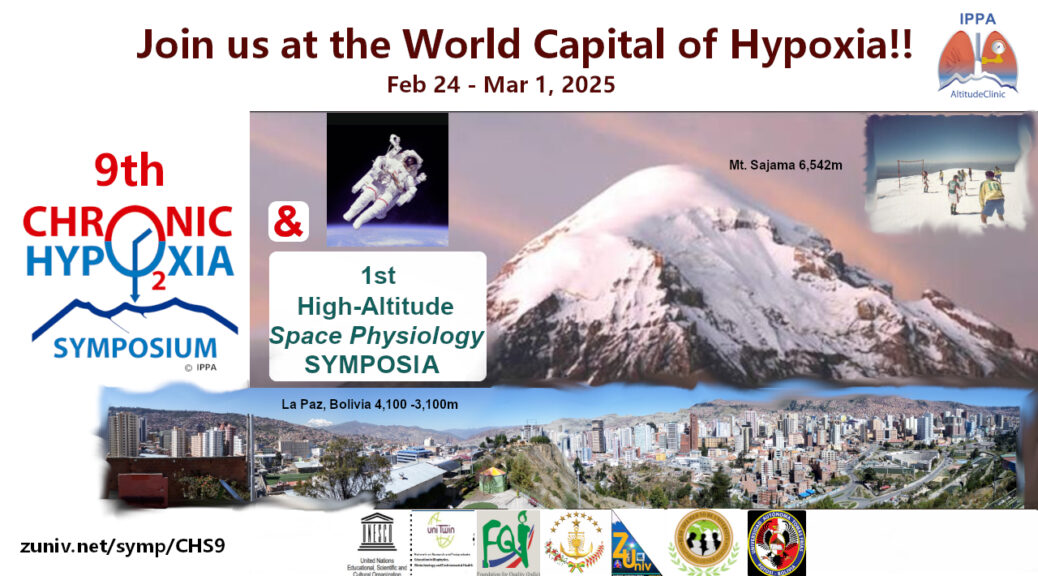
9th Chronic Hypoxia Symposium & 1st High Altitude Space Physiology Symposia

1) We just finished a very successful 

 headed by Dr. Richard Wilson from the University of Calgary, Canada, and Dr. Trevor Day from Mount Royal University and University of Calgary, Canada, hosted by Prof. Dr. Gustavo Zubieta-Calleja at our Institute located in the Capital of Hypoxia (La Paz, Bolivia).

2) Mark your calendar!! We invite you to join us at a unique:

9th Chronic Hypoxia Symposium 

&

1st High-Altitude Space Physiology Symposia

Feb 24 to Mar 1, 2025

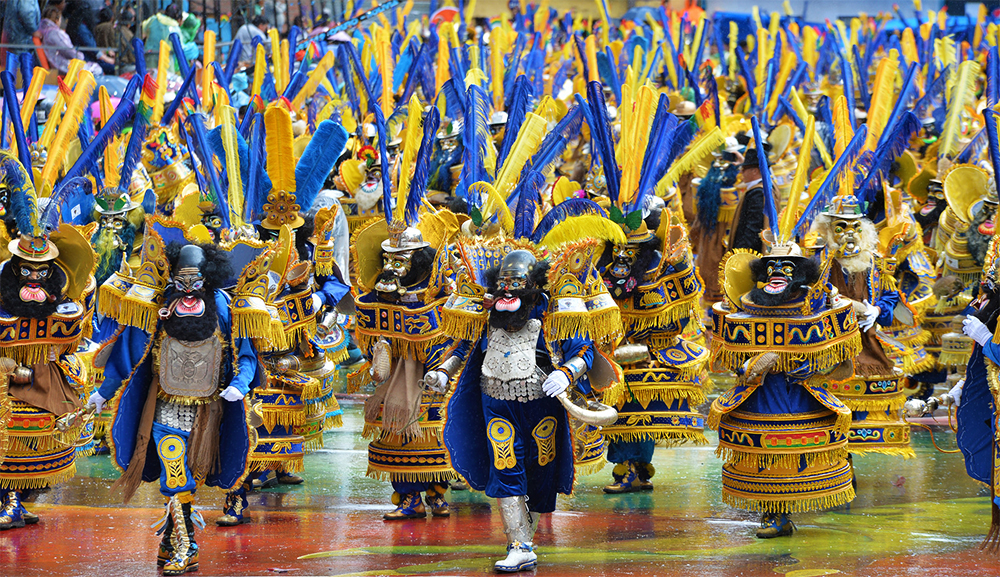
This time, we will end at the famous World Heritage Carnival in Oruro at 3800m—you cannot miss it!

On behalf of all the organizers, see you in Feb 2025!!

An unbelievable high altitude scientific event, that you cannot miss!!

We wait for you!

Prof. Dr. Gustavo Zubieta-Calleja

Head
High Altitude Pulmonary and Pathology Institute (HAPPI-IPPA)

www.Altitudeclinic.com

Av. Copacabana – Prolongación # 55Teleféricos Celeste y Blanco Av. Del Poetamap:

https://goo.gl/maps/nL2Y2TJjd4t
La Paz, Bolivia

Our COVID publications

What we achieved during this pandemic

The Hypoxia Man (India 2017)
Ex-Visiting Professor Univ. of Copenhagen

Visiting Professor BLDE Univ, Era Univ

Our blog latest news:

9th Chronic Hypoxia Symposium &

1st High-Altitude Space Physiology Symposium Feb 2025

http://zuniv.net/symp/CHS9

High Altitude Medicine News