
Science as a
family legacy
At HAPPI-IPPA, scientific rigor meets the warmth of a life's mission. We ensure that altitude medicine remains a living commitment for future generations.
To transform the human relationship with altitude through research.
To be the global reference in altitude and space health.
La ciencia como un
legado familiar
En HAPPI-IPPA, el rigor científico se une con la calidez de una misión de vida. Aseguramos que la medicina de altura siga siendo un compromiso vivo para las futuras generaciones.
Transformar la relación humana con la altura a través de la investigación científica.
Ser el referente global en medicina de altura y salud espacial.
+ 55 years of published evidence + 55 años de evidencia publicada
Bolivian medical warmth Calidez médica boliviana
Biospaceforming and space BioSpaceForming y el espacio
Andean and irreplaceable Andino e irremplazable
Global Scientific Network Red Científica Global
High-altitude scientific precision Precisión científica de altura
+ 55 years of high altitude science
that changed medicine
From a radical hypothesis in La Paz to a global institution — the story of HAPPI-IPPA is the story of three generations who refused to accept that altitude was a limitation, and turned it into a frontier.
Más de 55 años de ciencia de la altura
que cambiaron la medicina
Desde una hipótesis radical en La Paz hasta una institución global — la historia de HAPPI-IPPA es la historia de tres generaciones que se negaron a aceptar que la altura era una limitación y la convirtieron en una frontera.
Prof. Dr. Gustavo Zubieta-Castillo
El Científico Visionario
Nacido a 3,800 metros en Oruro, Bolivia, el Prof. Dr. Gustavo Zubieta-Castillo dedicó su carrera a defender una idea radical: la hipoxia crónica no es una enfermedad, sino una oportunidad de adaptación.
Con esta convicción revolucionaria, fundó el IPPA el 9 de julio de 1970. Sus conceptos sobre el Mal de Montaña Crónico y el Síndrome de Triple Hipoxia transformaron la medicina de gran altitud. Fue el primero en demostrar que la cirugía cardíaca podía realizarse en la altura, y lideró el histórico partido de fútbol en la cima del Nevado Sajama a 6,542m, demostrando que la adaptación a la altura extrema y los deportes de alto rendimiento son posibles.
Hoy, bajo la dirección de su hijo el Prof. Dr. Gustavo Zubieta-Calleja, HAPPI-IPPA continúa demostrando que la ciencia andina es ciencia global.
The Visionary Scientist
Born at 3,800 meters in Oruro, Bolivia, Prof. Dr. Gustavo Zubieta-Castillo proved that chronic hypoxia is not a disease, but an opportunity for adaptation.
On July 9, 1970, he founded IPPA. His Chronic Mountain Sickness concepts— and his Triple Hypoxia Syndrome transformed high altitude medicine. He was the first to prove that cardiac surgery could be performed at high altitude. He was the leader behind the historic Soccer game on the top of Mount Sajama 6542m, proving that adaptation to high altitude and extreme sports is possible.
Today, under the leadership of his son Prof. Dr. Gustavo Zubieta-Calleja, HAPPI-IPPA continues to prove that Andean science is global science.
"Parvatha Guru" —
the Mountain Guru of India
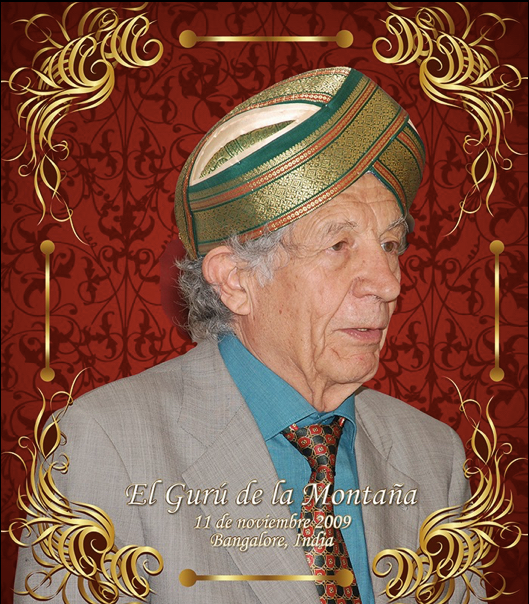
At Saint John’s Medical College in Bangalore, India, Prof. Dr. Gustavo Zubieta-Castillo was honored with the title of "Parvatha Guru" — Sanskrit for Mountain Guru — by Dr. Thuppil Venkatesh, the "Lead Man of India" and WHO advisor.
This recognition cemented the connection between the Andes and the Himalayas — two great mountain ranges united by the science of altitude physiology. It is this Andes-India connection that later inspired the selection of Mukta Vaani (meaning "free voice" in Sanskrit) as HAPPI-IPPA’s institutional typeface.
"Parvatha Guru" —
el Gurú de la Montaña de la India
En el Saint John’s Medical College de Bangalore, India, el Prof. Dr. Gustavo Zubieta-Castillo fue honrado con el título de "Parvatha Guru" — sánscrito para Gurú de la Montaña — por el Dr. Thuppil Venkatesh, el "Lead Man de la India" y asesor de la OMS.
Este reconocimiento cimentó la conexión entre los Andes y el Himalaya — dos grandes cadenas montañosas unidas por la ciencia de la fisiología de la altura. Es esta conexión Andes-India la que más tarde inspiró la selección de Mukta Vaani (que significa "voz libre" en sánscrito) como la tipografía institucional de HAPPI-IPPA.

Two generations,
one mission
The torch passed from father to son — from Prof. Dr. Gustavo Zubieta-Castillo Sr. to Prof. Dr. Gustavo Zubieta-Calleja Jr. — but the mission remained the same: to transform humanity's understanding of life at high altitude.
Together they co-authored dozens of scientific publications, organized international congresses, built the Chacaltaya Laboratory at 5,230m, proved that life at Everest's summit is physiologically possible, and created the concept of BioSpaceForming — extending altitude science to outer space.
Dos generaciones,
una misión
La antorcha pasó de padre a hijo — del Prof. Dr. Gustavo Zubieta-Castillo Sr. al Prof. Dr. Gustavo Zubieta-Calleja Jr. —, pero la misión siguió siendo la misma: transformar la comprensión humana de la vida en la altura.
Juntos fueron coautores de decenas de publicaciones científicas, organizaron congresos internacionales, construyeron el Laboratorio de Chacaltaya a 5,230m, demostraron que la vida en la cima del Monte Everest es fisiológicamente posible y crearon el concepto de BioSpaceForming, extendiendo la ciencia de altura al espacio exterior.
55 years of milestones 55 años de hitos
Pre-Foundational MilestonesHitos Pre-Fundacionales
Prof. Dr. Gustavo Zubieta-Castillo proves that cardiac surgery at high altitude is possible, paving the logical path toward radical adaptation science. El Prof. Dr. Gustavo Zubieta-Castillo prueba que la cirugia cardiaca en la altura es posible, pavimentando el camino hacia la ciencia de adaptación.
World's First Altitude ClinicLa Primera Clínica de Altura en el mundo
On July 9, 1970, Prof. Dr. Gustavo Zubieta-Castillo founds the Institute of Pathology at High Altitude in La Paz at 3,500m, creating the first specialized altitude clinic. El 9 de julio de 1970, el Prof. Dr. Gustavo Zubieta-Castillo funda el Instituto Privado de Patología en la Altura (Clinica IPPA) en La Paz a 3.500m, creando la primera clínica especializada.
I World Congress on High Altitude Medicine and PhysiologyI Congreso Mundial de Altura
HAPPI-IPPA convenes with the American Embassy the first world congress entirely dedicated to altitude medicine. Researchers recognize La Paz as a global scientific reference. HAPPI-IPPA con la Embajada Americana convoca al Primer Congreso Mundial de Medicina y Fisiología dedicado enteramente a medicina de altitud, consolidando a La Paz como referencia científica global.
Chacaltaya Glass Pyramid LaboratoryLaboratorio Pirámide de Vidrio de Chacaltaya
Construction of the Glass Pyramid at 5,230m, the most extreme laboratory in the world, anticipating future space physiology research. Se construye la Pirámide de Vidrio de Chacaltaya, el laboratorio de alta altitud más extremo del mundo, anticipando la fisiología espacial.
Sajama Soccer MatchFútbol en el Sajama
Historic soccer match at 6,542m proves the human body adapted to extreme hypoxia is capable of sustained physical activity. Se juega un partido de fútbol histórico en la cumbre del Sajama (6.542 m), demostrando la alta capacidad del cuerpo adaptado a la hipoxia.
CHT AwardPremio CHT
IPPA receives the CHT Award for three decades of rigorous research and ethics, consolidating its world reference status. HAPPI-IPPA recibe el Premio CHT reconociendo tres décadas de investigación rigurosa y ética científica impecable.
1st Chronic Hypoxia SymposiumSimposio de Hipoxia
Chronic hypoxia is formalized as a legitimate global research field. Scientists converge in La Paz to lead the world debate. Se formaliza la hipoxia crónica como campo académico legítimo. Científicos de múltiples disciplinas convergen en La Paz.
BiospaceformingBiospaceforming
Concept of using Andean hypoxia as a bridge to space exploration. High altitude research becomes a bridge to space habitation. Se articula el concepto de Biospaceforming: utilizar la hipoxia andina como laboratorio de preparación espacial.
Professor in IndiaProfesor en India
Prof. Dr. Gustavo Zubieta-Calleja named Visiting Professor in India, joining Himalayas and Andes in scientific dialogue. El Prof. Dr. Gustavo Zubieta-Calleja une Himalaya y Andes en diálogo científico al ser nombrado profesor visitante en India.
COVID-19 FindingsHallazgos COVID-19
Revolutionary findings: COVID-19 incidence and severity are lower at extreme altitudes. Penumolysis first described. Hallazgos revolucionarios: menor incidencia y severidad de COVID-19 en altura. Primera descripción de Neumólisis.
1st High Altitude Space Physiology1er Simposio Espacial
Leading space physiology, combining Earth adaptation with astronaut preparation. IPPA leads 21st-century science. La institución andina lidera la fisiología espacial del siglo XXI, uniendo adaptación terrestre con preparación espacial.
Patents & 100 YearsPatentes y Centenario
Celebrating 100 years since our founder's birth while filing 3 US patents for hypoxia devices. Legacy turned reality. Se presentan 3 patentes en EE.UU. sobre equipos de hipoxia, celebrando los 100 años del nacimiento del fundador.
Prof. Dr. Gustavo
Zubieta-Calleja Jr.
Son and scientific heir of the founder, Prof. Dr. Gustavo Zubieta-Calleja Jr. has led HAPPI-IPPA for decades with the same radical conviction: altitude is not a threat, it is a frontier.
Visiting Professor at the University of Copenhagen and BLDE University India, he authored the BioSpaceForming concept — extending altitude science to outer space.
Prof. Dr. Gustavo
Zubieta-Calleja Jr.
Hijo y heredero científico del fundador, el Prof. Dr. Gustavo Zubieta-Calleja Jr. ha liderado HAPPI-IPPA durante décadas con la misma convicción radical: la altitud no es una amenaza, es una frontera.
Profesor Visitante en la Universidad de Copenhague y la Universidad BLDE de India, es autor del concepto BioSpaceForming, extendiendo la ciencia de altura al espacio exterior.

Dr. Natalia
Zubieta DeUrioste
Granddaughter of the founder and daughter of the current director, Dr. Natalia Zubieta DeUrioste represents the third generation of the Zubieta scientific lineage. Trained in medicine and neurosciences at high altitude, she brings the combination of clinical expertise, scientific curiosity and institutional memory that defines HAPPI-IPPA.
In 2010, she founded the first High Altitude Museum in the world — preserving and communicating the scientific heritage of 55 years of altitude research.
Dra. Natalia
Zubieta DeUrioste
Nieta del fundador e hija del actual director, la Dra. Natalia Zubieta DeUrioste representa la tercera generación del linaje científico Zubieta. Formada en medicina y neurociencias en la altura, aporta la combinación de experiencia clínica, curiosidad científica y memoria institucional que define a HAPPI-IPPA.
En 2010, fundó el primer Museo de la Altura en el mundo, preservando y difundiendo el patrimonio científico de 55 años de investigación en la altura.
Three generations,
one unbroken mission
What began as one man's radical hypothesis in La Paz in 1970 has become a global reference institution in altitude medicine, hypoxia research and space physiology.
From the Bolivian highlands to Bangalore, Copenhagen, New Delhi and outer space — the Zubieta legacy continues to grow, generation after generation, breath by breath.
Tres generaciones,
una misión inquebrantable
Lo que comenzó como la hipótesis radical de un hombre en La Paz en 1970 se ha convertido en una institución de referencia mundial en medicina de altura, investigación de hipoxia y fisiología espacial.
Desde las tierras altas de Bolivia hasta Bangalore, Copenhague, Nueva Delhi y el espacio exterior — el legado de Zubieta continúa creciendo, generación tras generación, aliento tras aliento.